
England Deaf Karting made history during the final weekend of the 2026 season by entering three full teams, Blue Team, Yellow Team, and White Team, into the Silverstone 24-Hour Endurance Race. It marked the first time the organisation had entered three teams into a single endurance event, and the first time the prestigious 24-hour race had been hosted at Silverstone Circuit.
The event brought excitement, anticipation, and a completely new set of challenges for everyone involved. Although England Deaf Karting already had extensive experience in endurance racing, Silverstone presented a very different environment from circuits previously used by the organisation, particularly Teesside. The scale of the venue, combined with unfamiliar paddock procedures, pit lane regulations, and stricter safety systems, required rapid adaptation from both drivers and support crews.
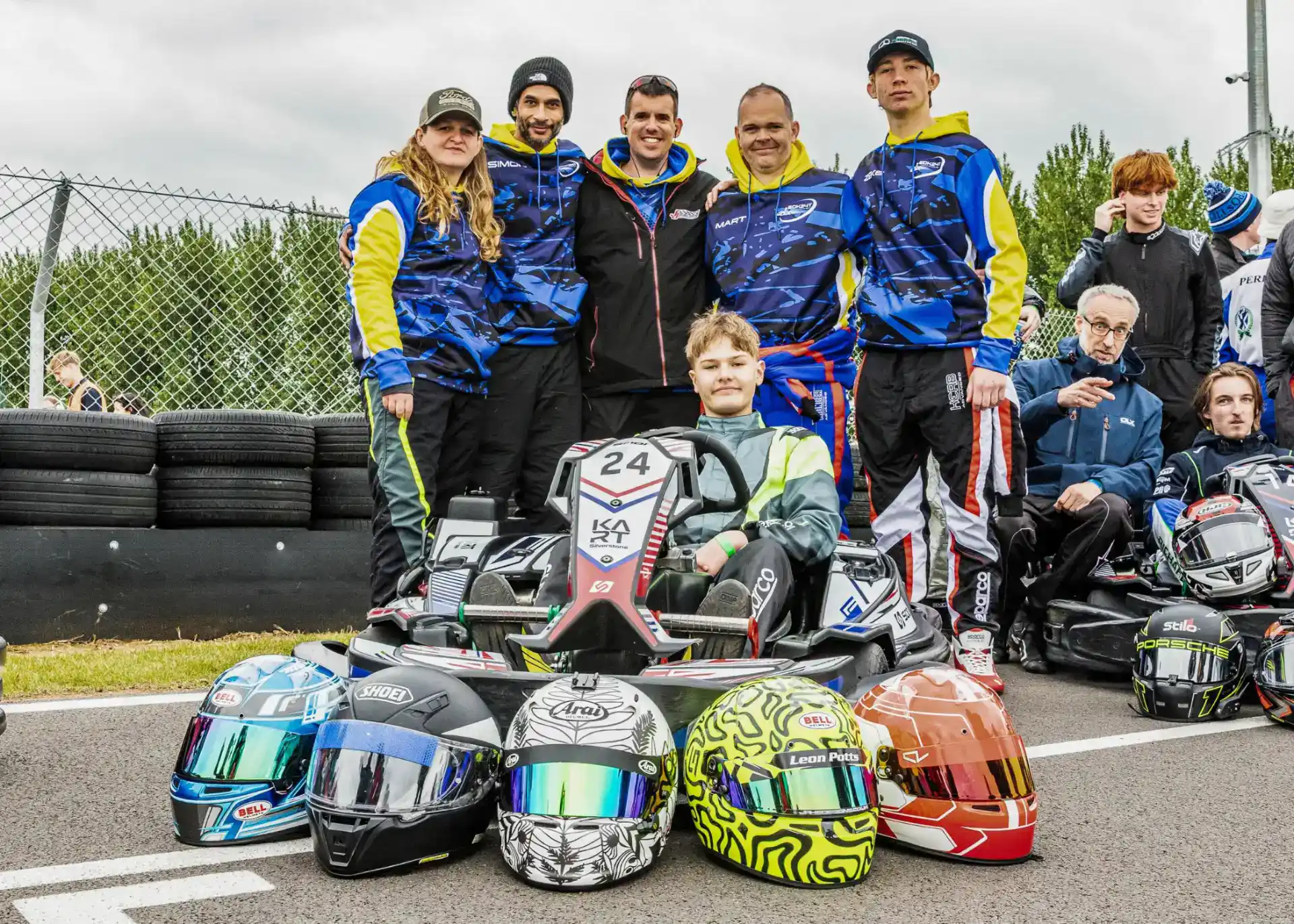
For a Deaf racing organisation, these challenges carried additional importance. Communication systems had to be carefully managed to ensure that driver changes, safety instructions, race updates, and pit coordination could operate smoothly throughout the event. With 14 drivers and 15 pit crew members working together across the three teams, organisation and structure were essential. Teams relied heavily on visual communication methods, written instructions, hand signals, and strong teamwork to maintain clarity and control throughout the full 24 hours.
The unfamiliar surroundings made the race more demanding than expected. Learning new operational systems while competing in one of the UK’s toughest endurance races tested every member of the organisation. Despite this, all three teams remained focused and worked together throughout the weekend, demonstrating the determination, resilience, and professionalism that have become central to England Deaf Karting over the years.
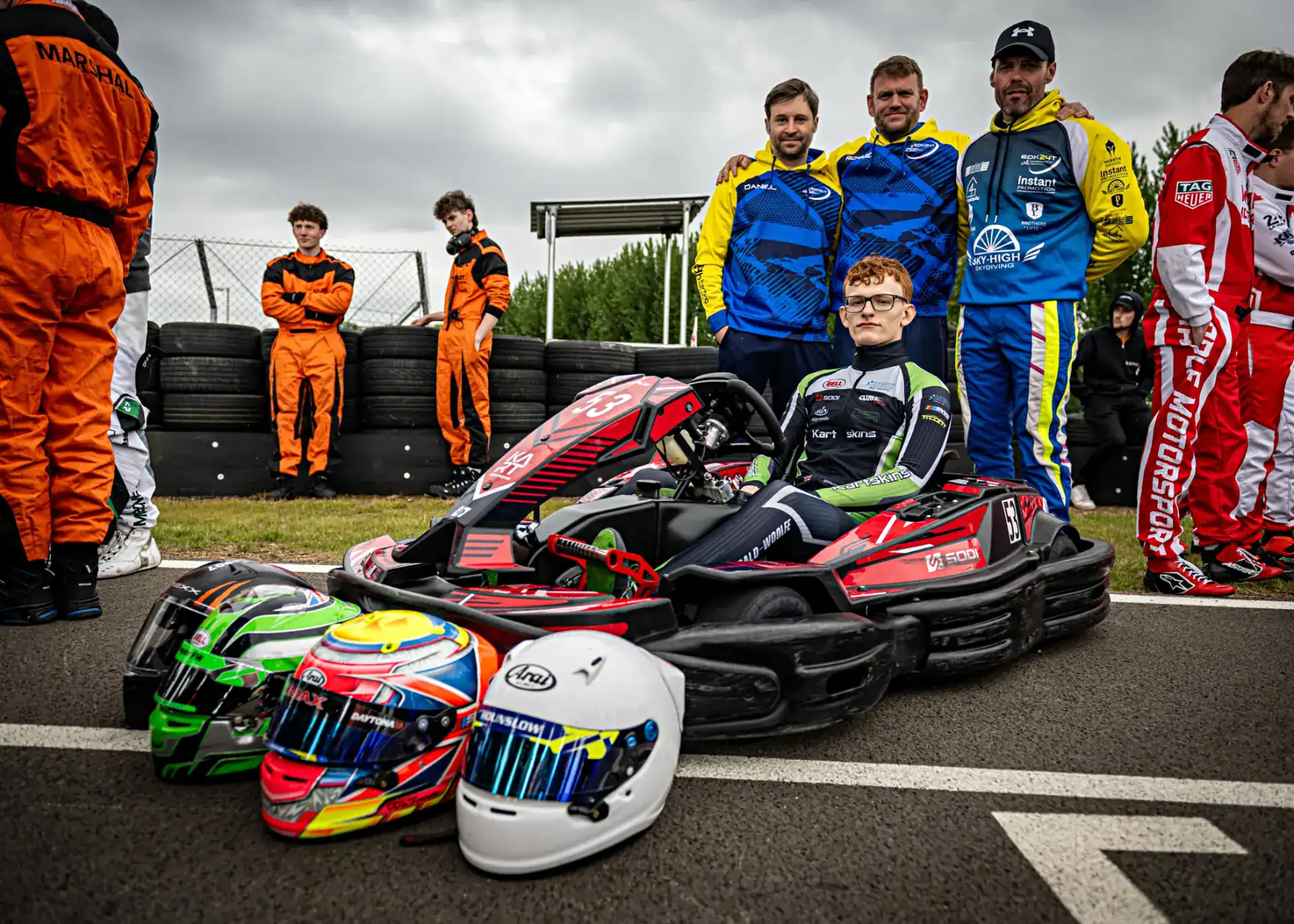
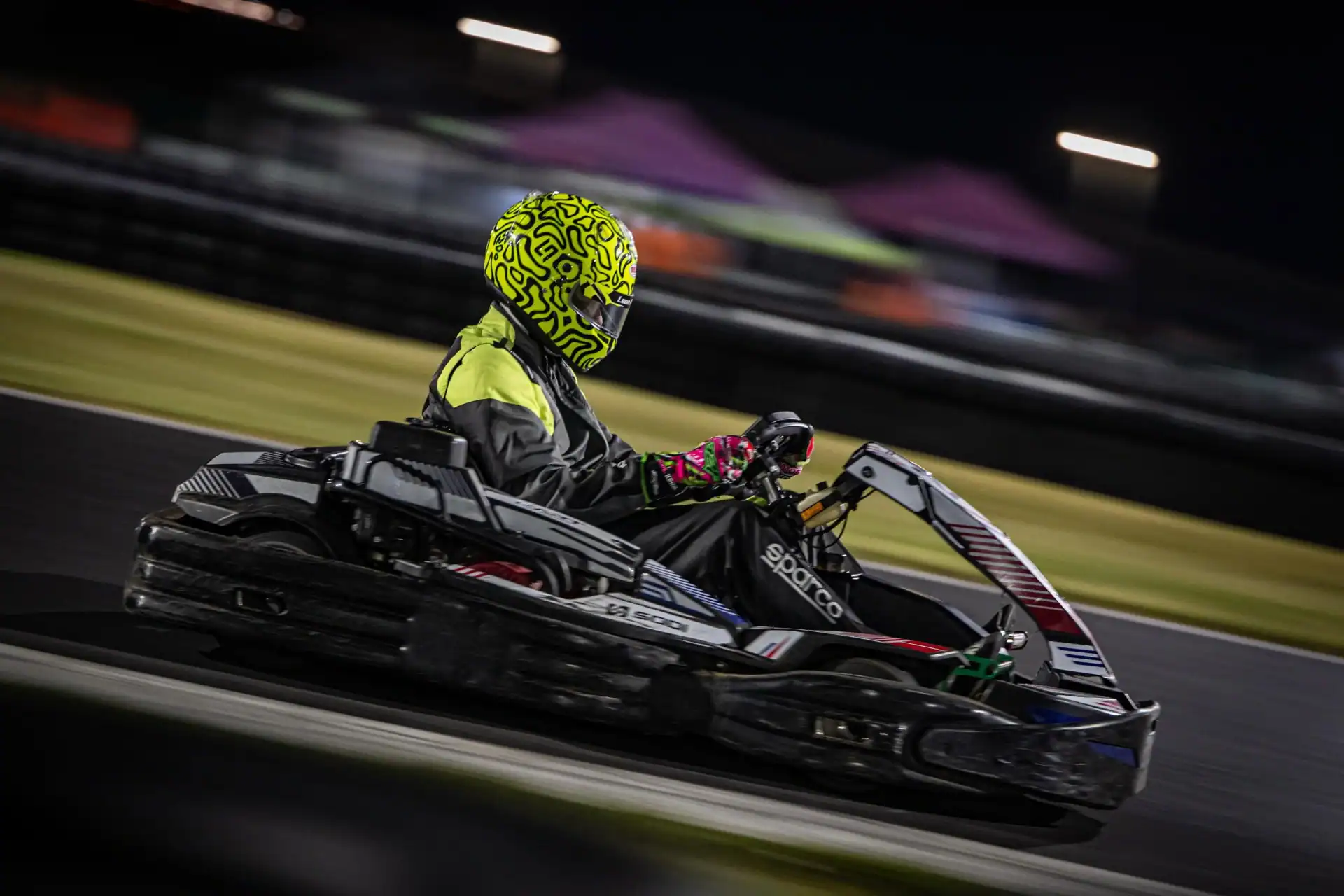
Weather conditions added another major challenge. Throughout the race, the circuit repeatedly changed between dry and wet racing lines, creating unpredictable grip levels across the track. Drivers were forced to constantly adapt their braking points, racing lines, and overall driving style as conditions changed hour by hour. These transitions between grip and low-grip conditions made the race both physically exhausting and mentally demanding for every competitor.
As the race progressed through day and night, the teams continued to battle fatigue, changing weather, mechanical pressure, and the intense concentration required in endurance racing. Pit crews also played a vital role behind the scenes, ensuring smooth driver changes, maintaining kart performance, and keeping communication flowing under difficult circumstances.
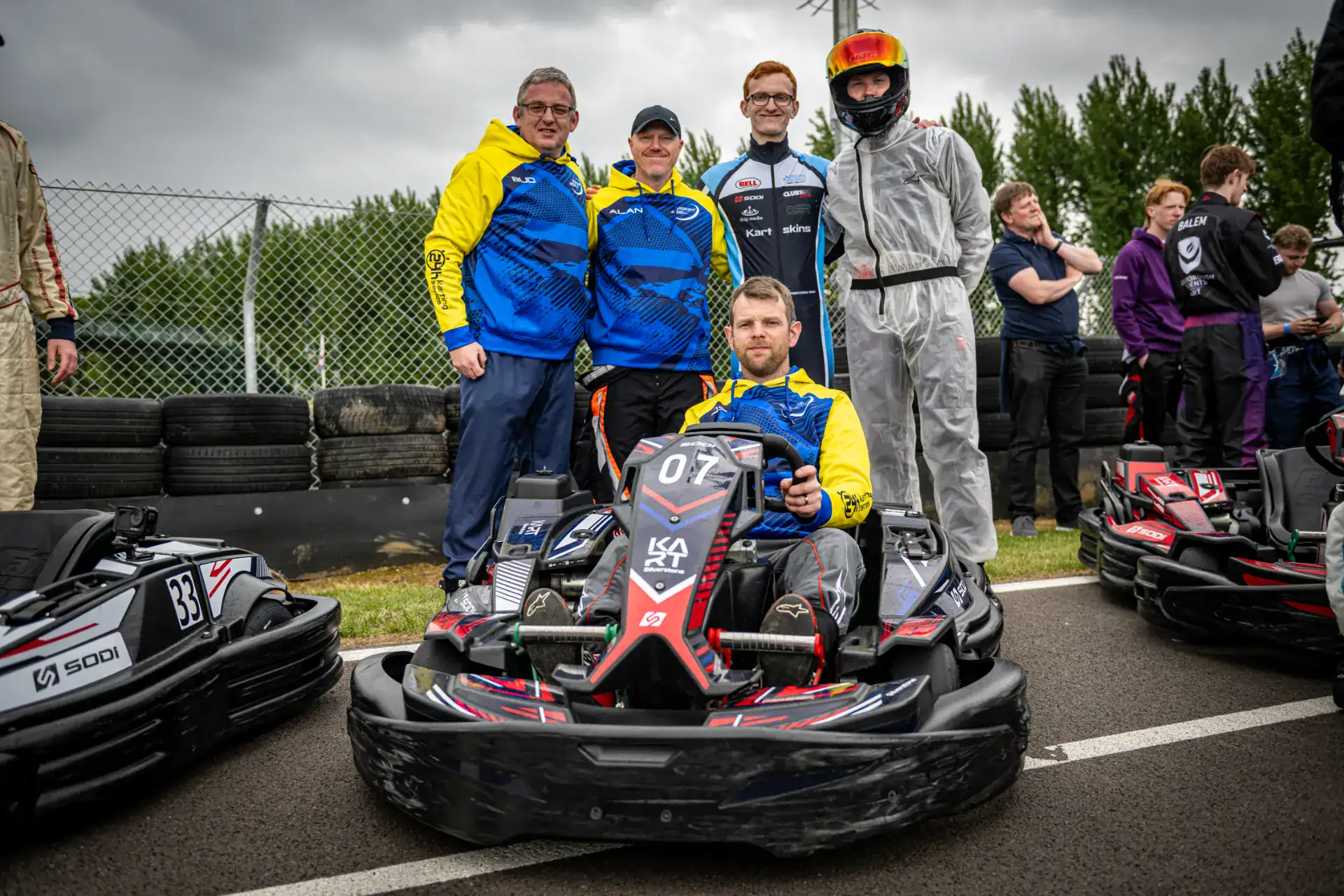
Blue Team faced mechanical difficulties during the race and was forced to change karts following technical problems. Yellow Team also encountered challenges, experiencing issues with kart numbers 34 and 7, which affected overall consistency and race momentum. Despite these setbacks, the team continued to push forward and remained competitive under difficult conditions.
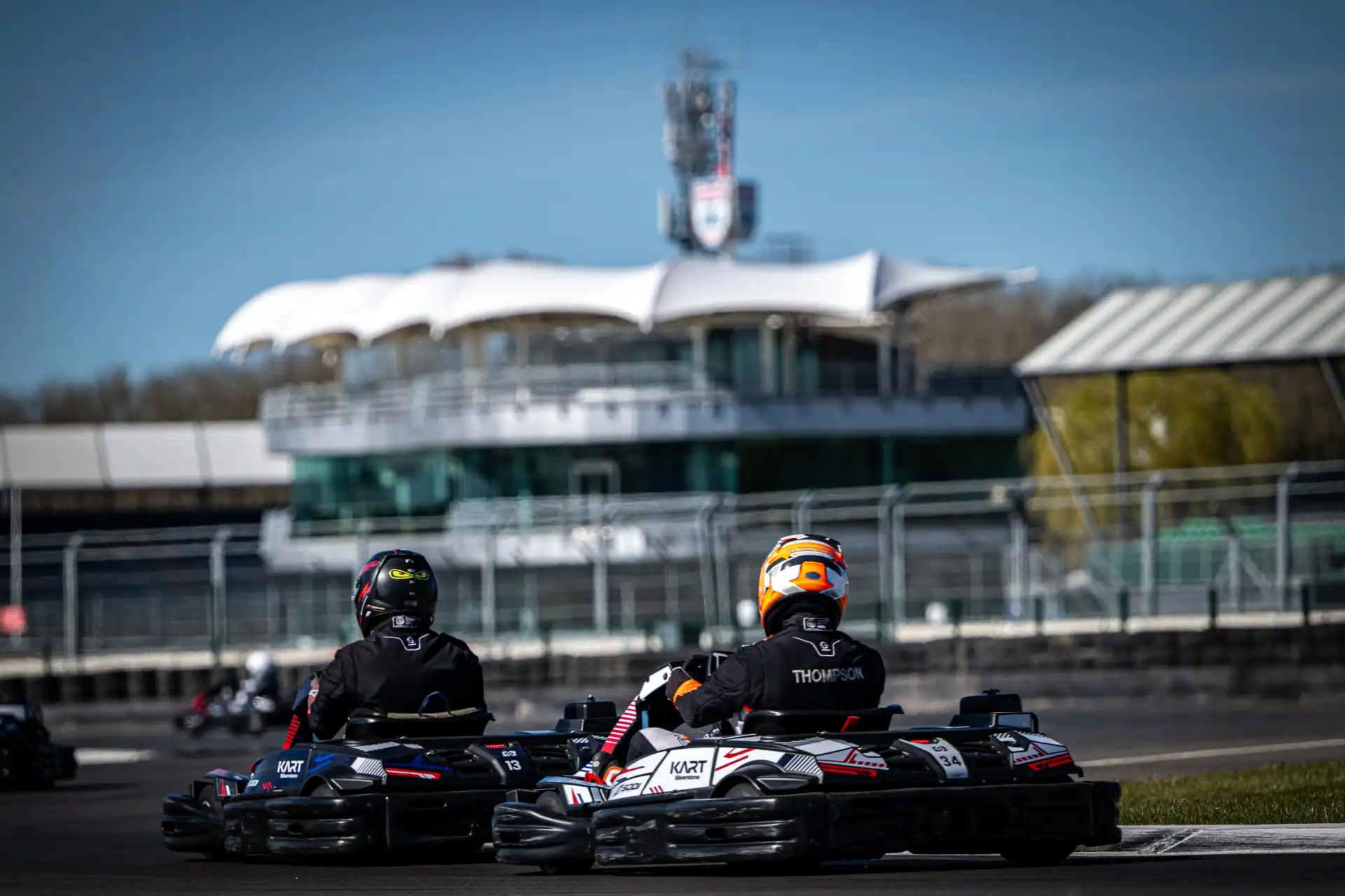
In contrast, White Team experienced a smooth and reliable race without any major kart problems throughout the full 24 hours. Their consistency and reliability allowed them to complete the endurance event without significant technical interruptions.
By the conclusion of the 24 hours, England Deaf Karting had not only completed one of the most demanding endurance events in the country, but had also achieved a significant milestone for Deaf motorsport. Out of 45 competing karts, Blue Team finished in 22nd place, Yellow Team secured 33rd place, and White Team completed the race in 39th place.
The successful participation of all three teams demonstrated the growth, commitment, and capability of the organisation on a national stage. More importantly, the weekend reinforced that Deaf racers can compete successfully at the highest level of endurance karting when provided with the correct support, preparation, and accessible communication systems.
The event became more than just a race. It represented progress, inclusion, teamwork, resilience, and pride for the entire England Deaf Karting community.